Shade in the clearingRead More














Architect, Lisbon, 2001
A practice focused on architectural design as a response to context, use, and spatial experience.
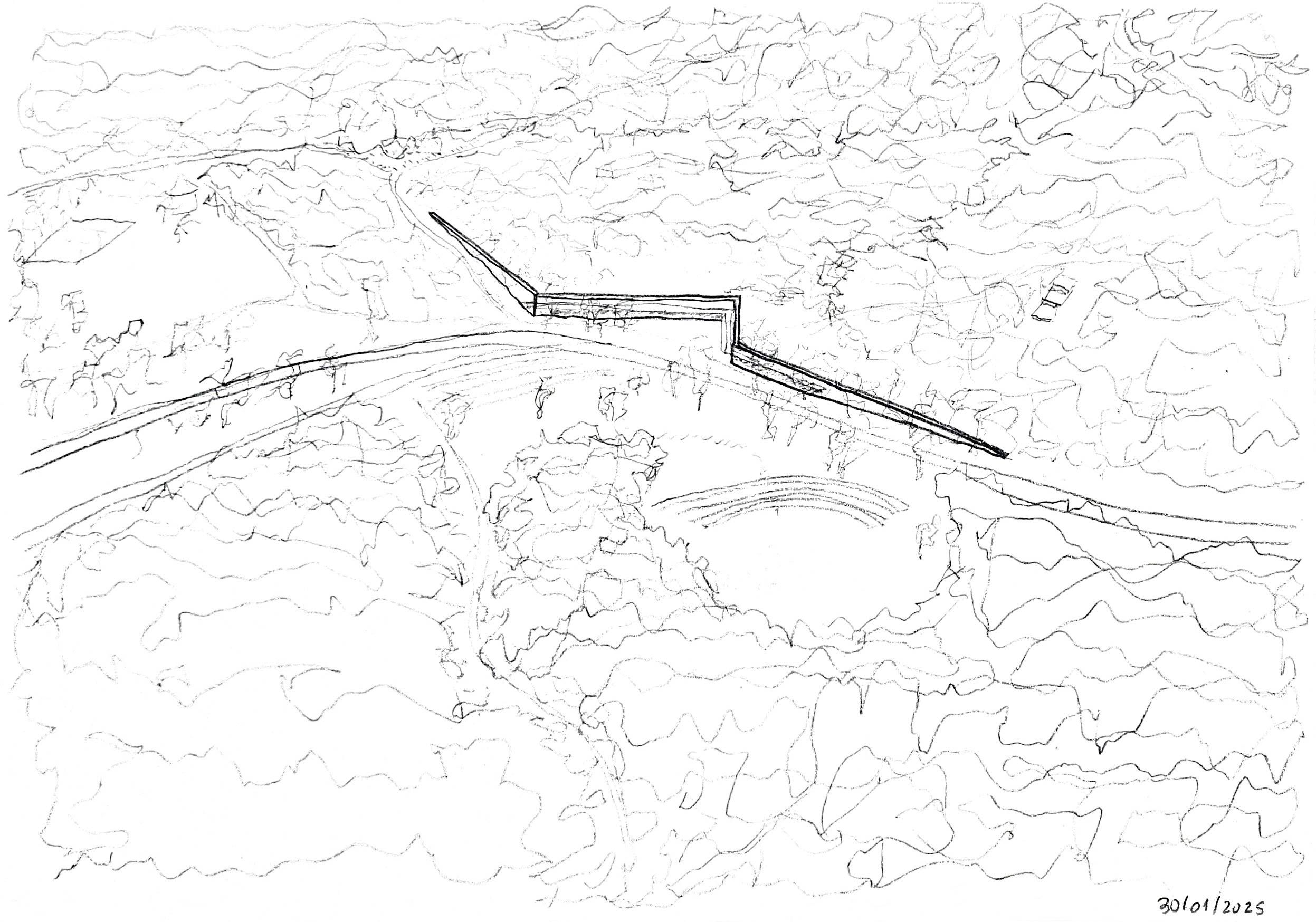
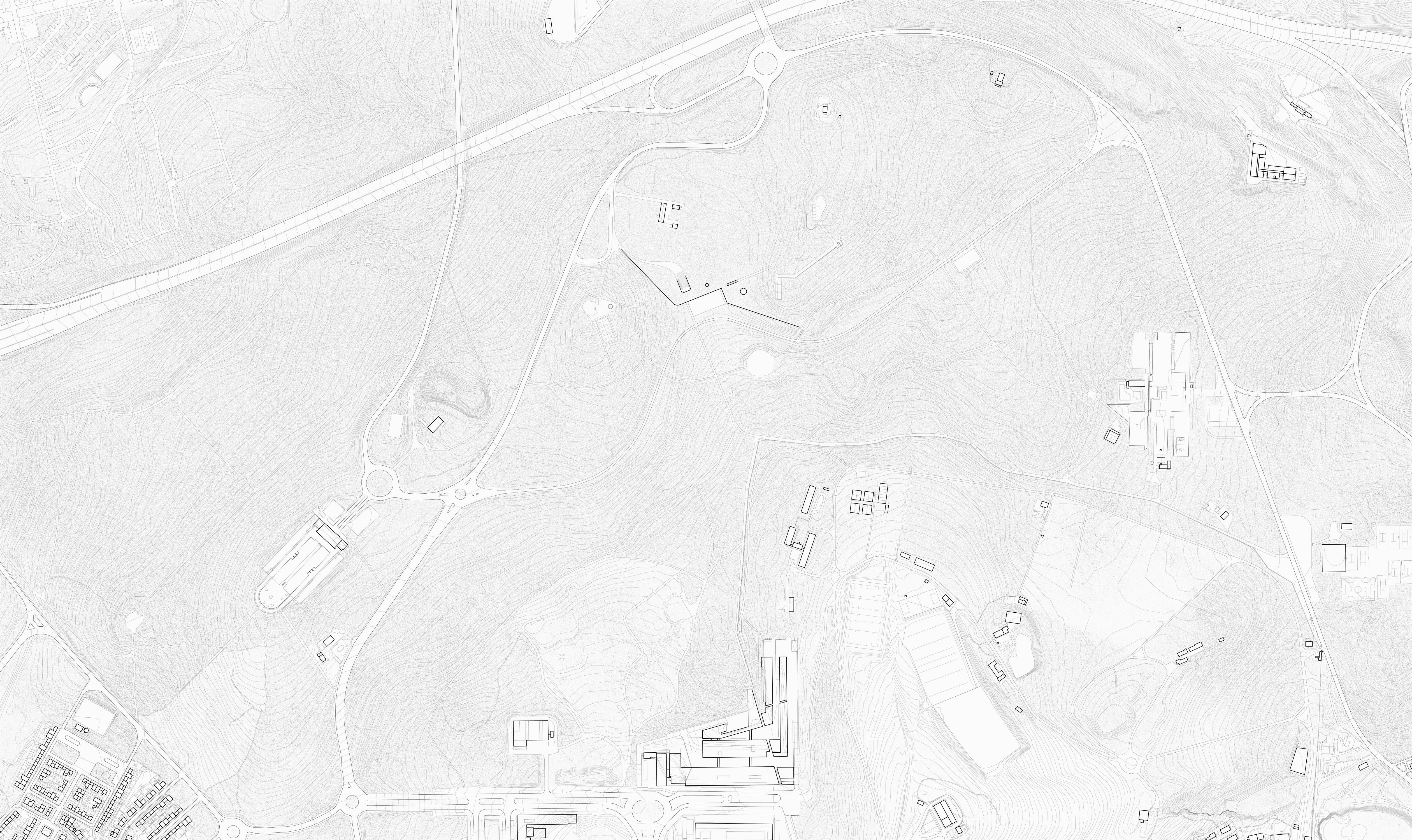
Located in the southern area of the Monsanto Forest Park, Alameda Keil do Amaral traces a pedestrian path, once a road, which along its route reveals a clearing within Monsanto that, through a valley, overlooks the vast Tejo river landscape. This place concentrates some of Monsanto’s main qualities: proximity to nature, permanence in space, and the possibility of social encounters. However, the disarticulation and fragmentation of spaces make it difficult to clearly read this territory.
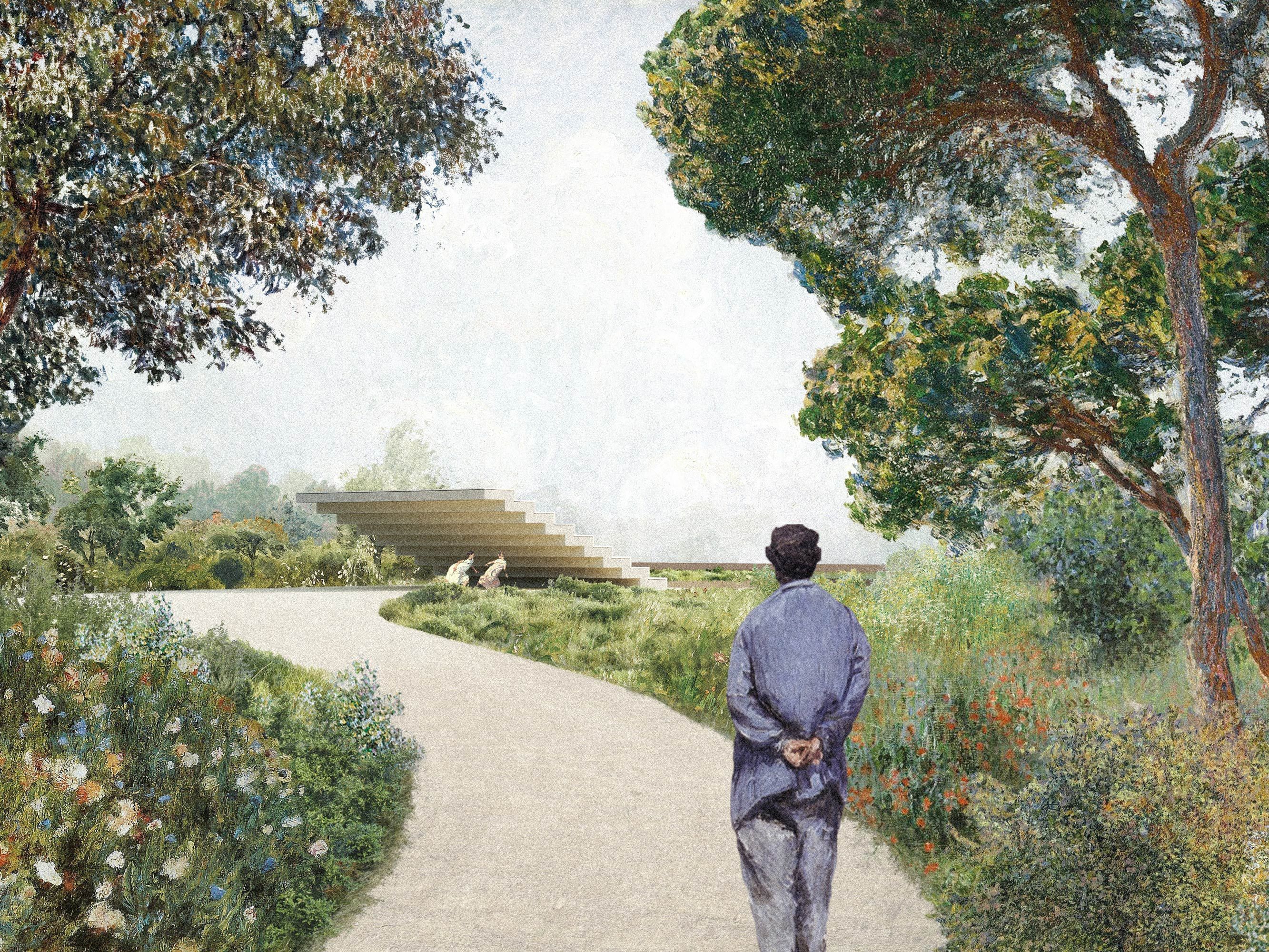
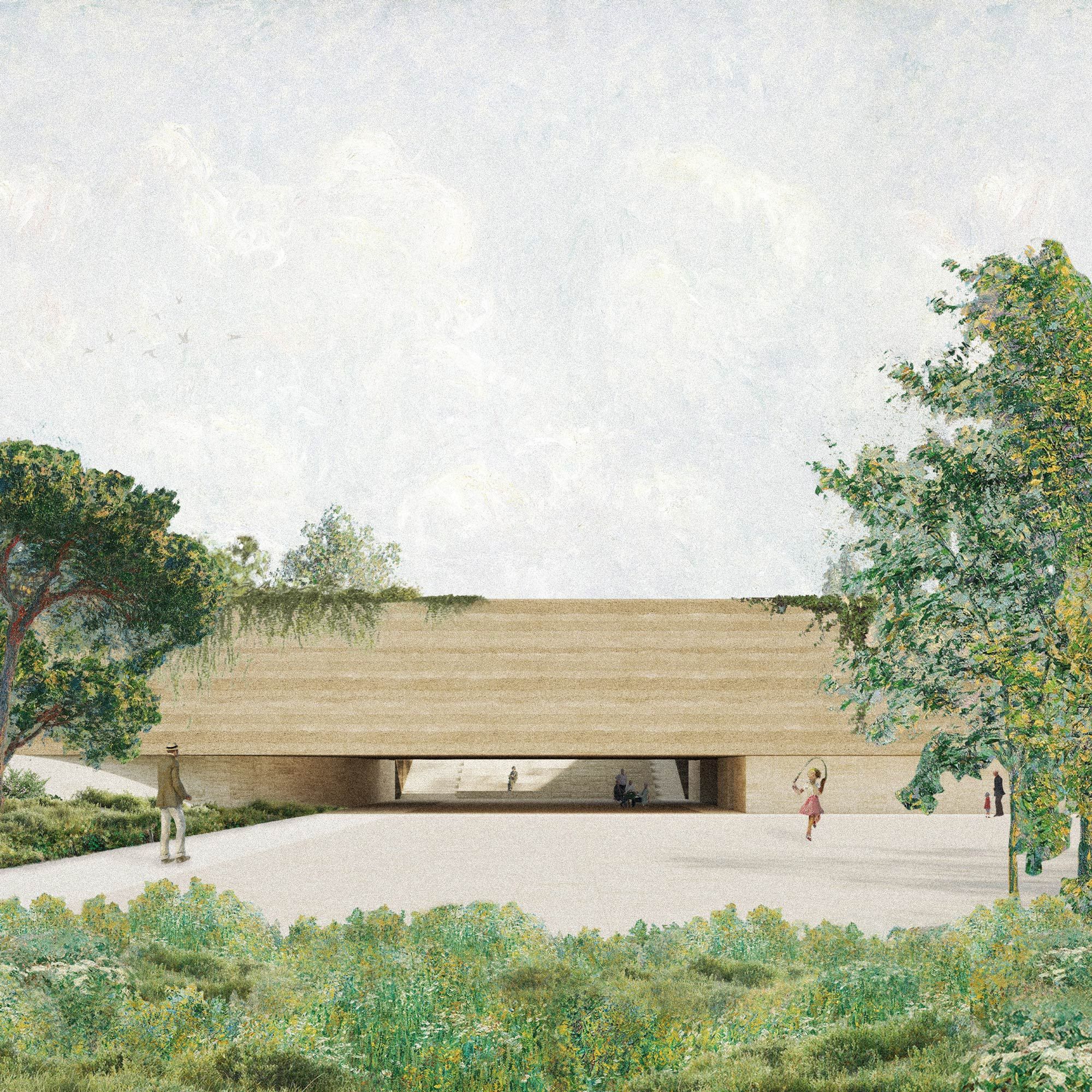
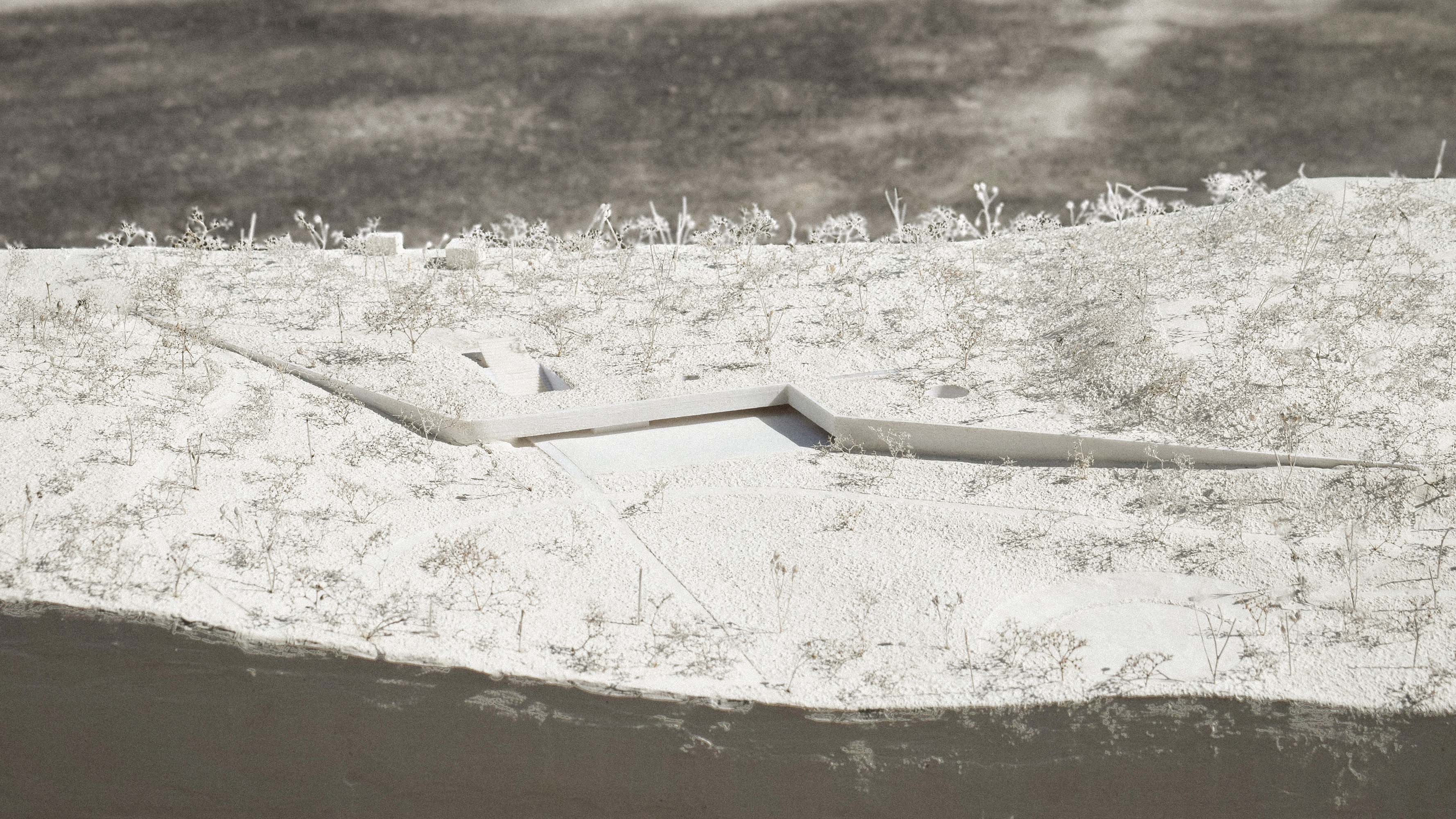
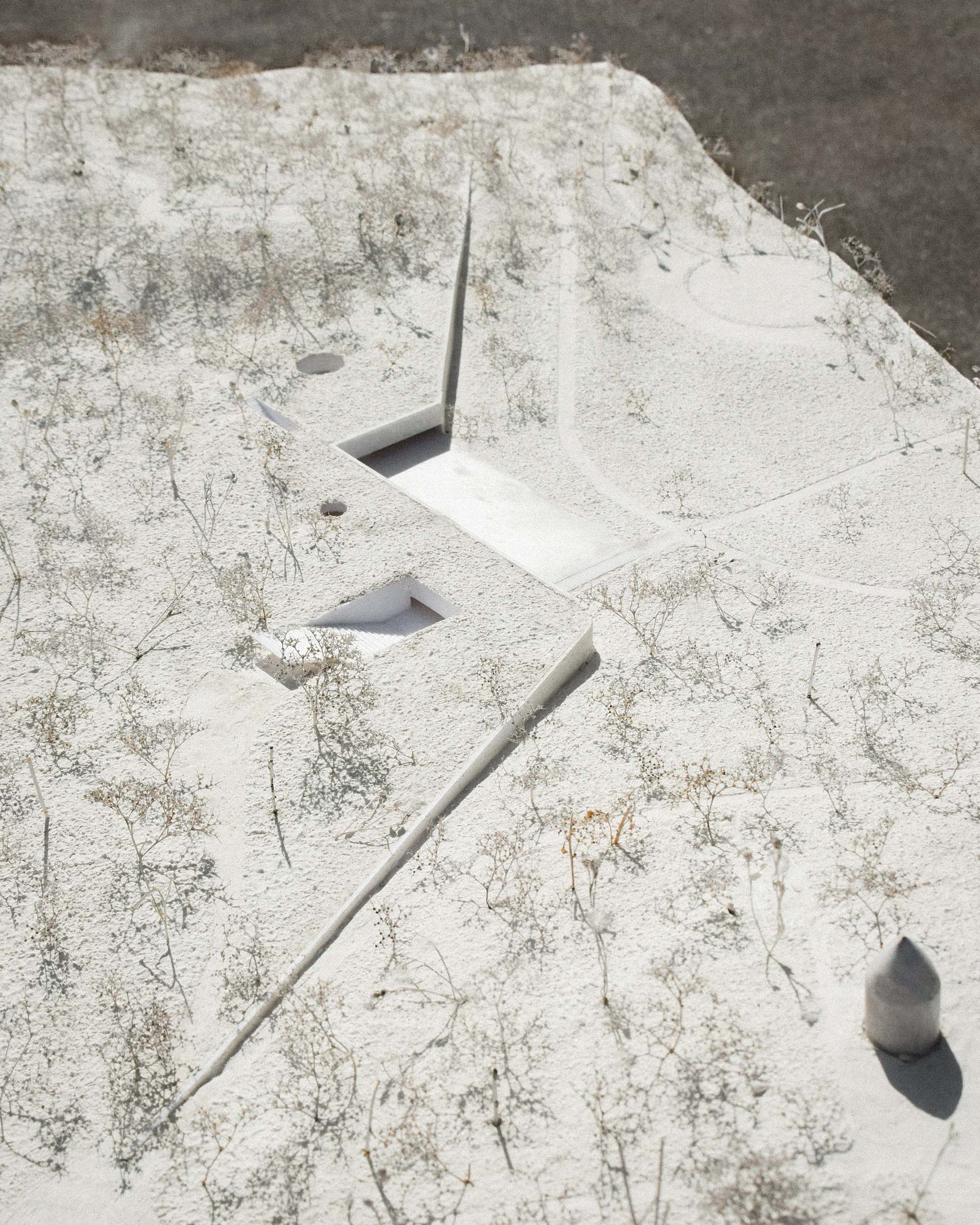
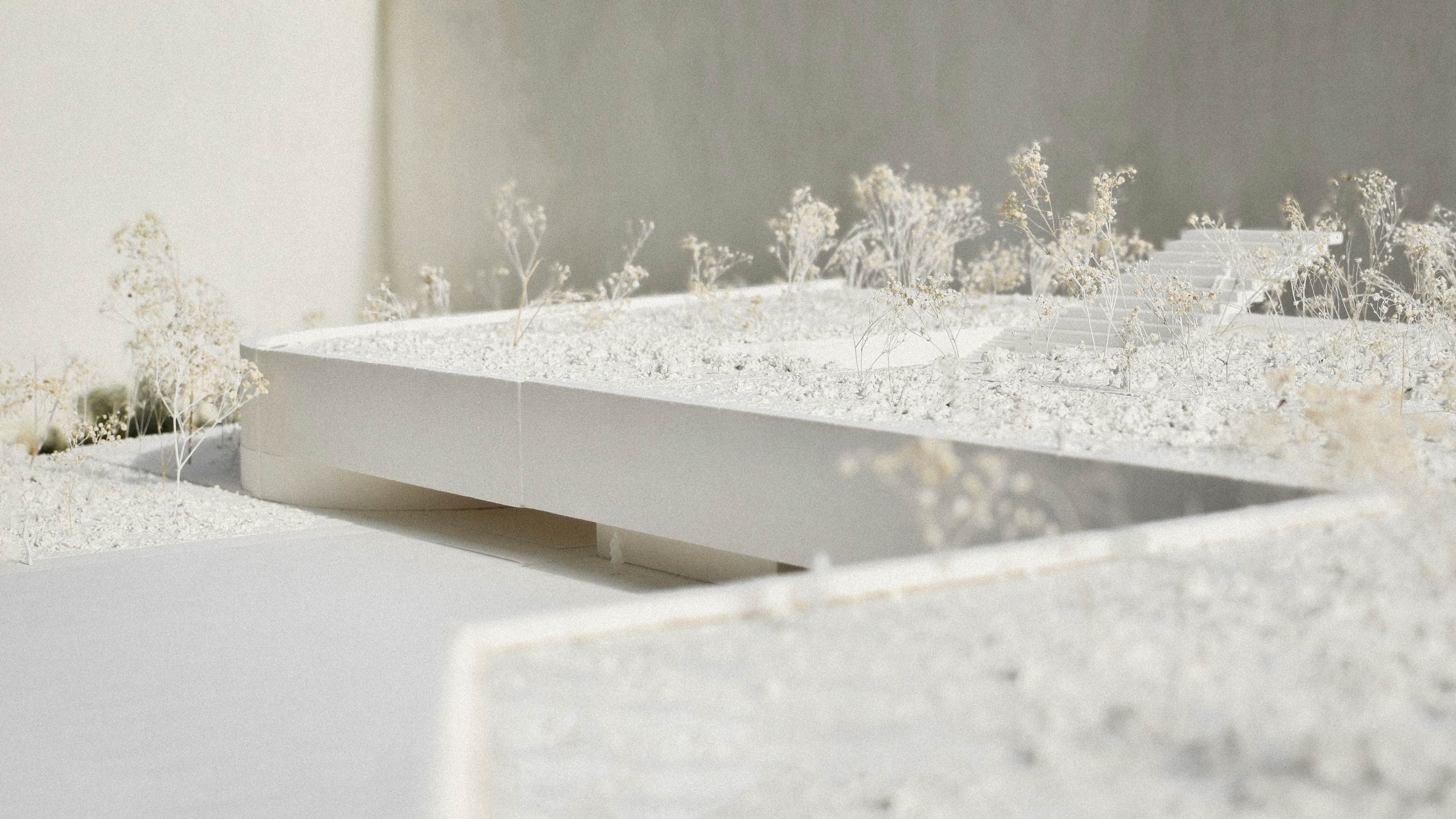
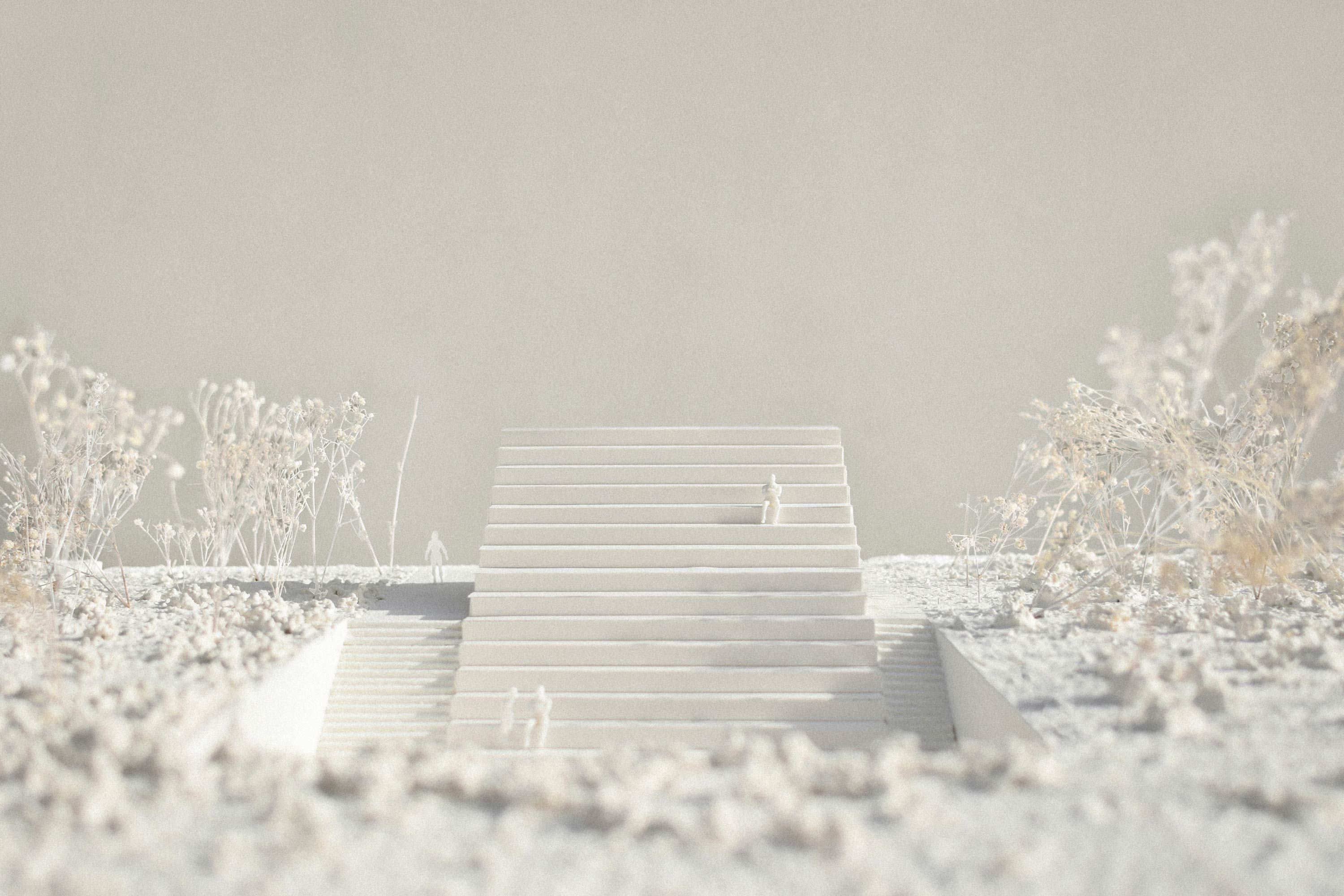
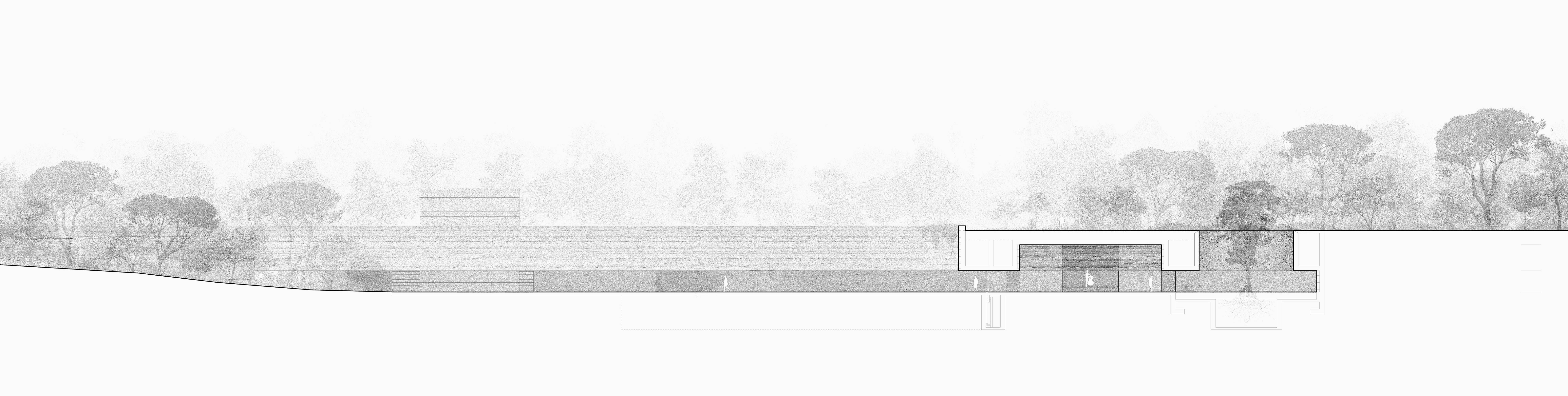
The proposal arises as a response to this imbalance, seeking to restore cohesion and clarity to the site. The project positions itself as an extension of the landscape, merging with its surroundings through a single gesture: a continuous retaining wall, uniform in height, which organizes the territory, establishes an upper limit to the clearing, and articulates various paths, levels, and views.
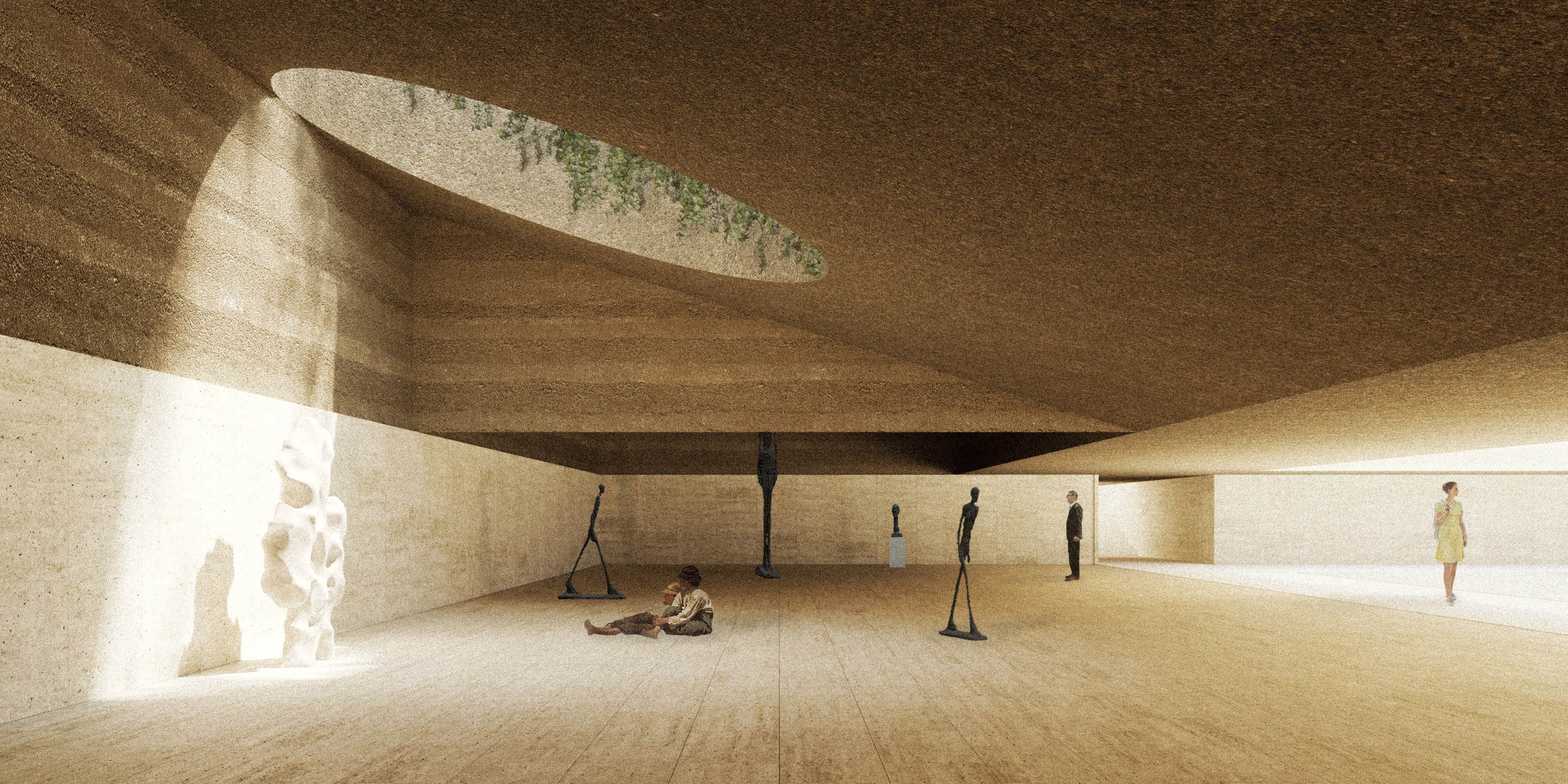
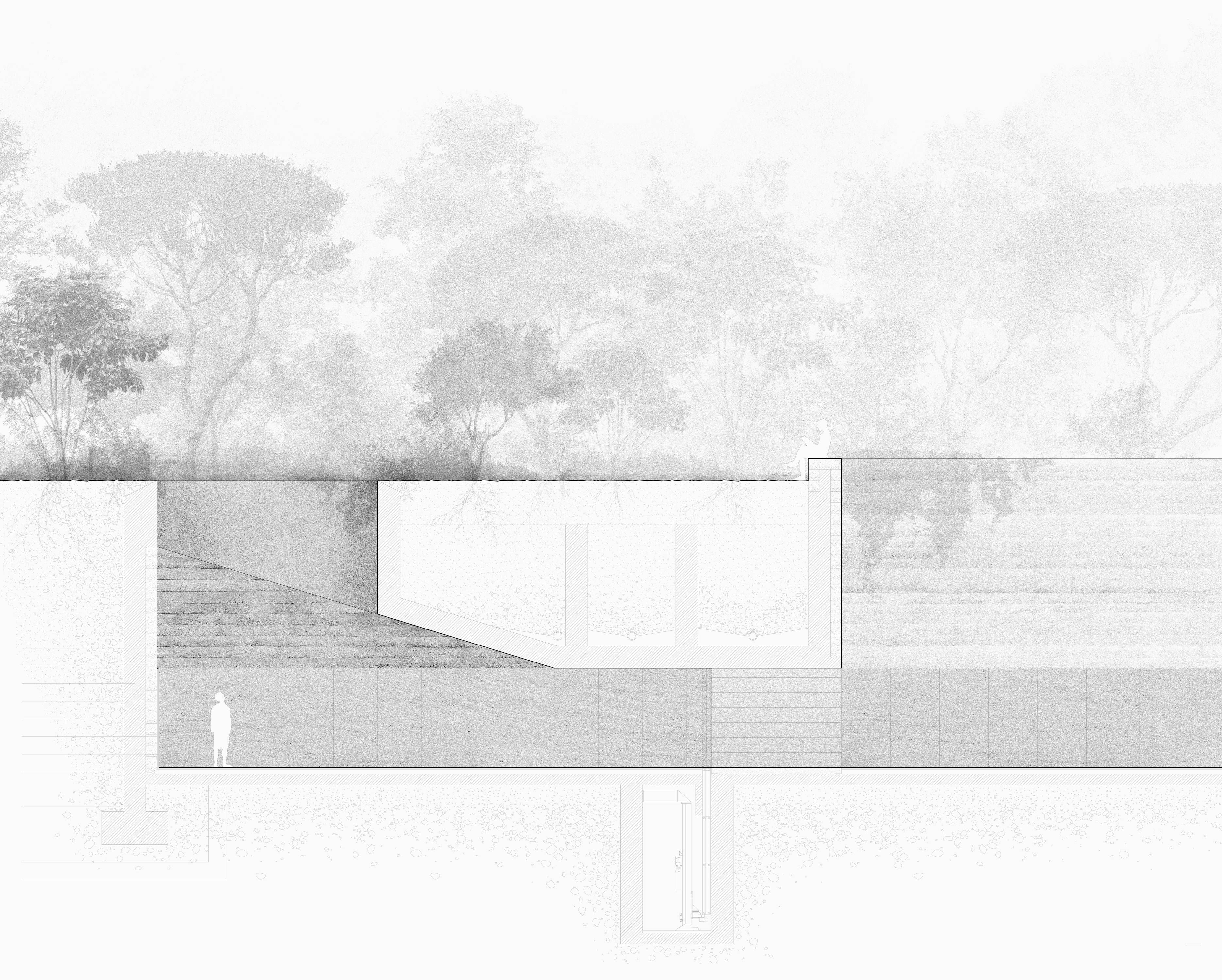
A wide plaza mediates the relationship between paths and landscape, serving as a meeting place. From it, a longitudinal opening is formed in the wall, revealing the project’s spaces and creating a continuous connection between interior and exterior. The ensemble is organized into three spaces, each with its own identity, potentially accommodating cultural, social, and leisure activities.
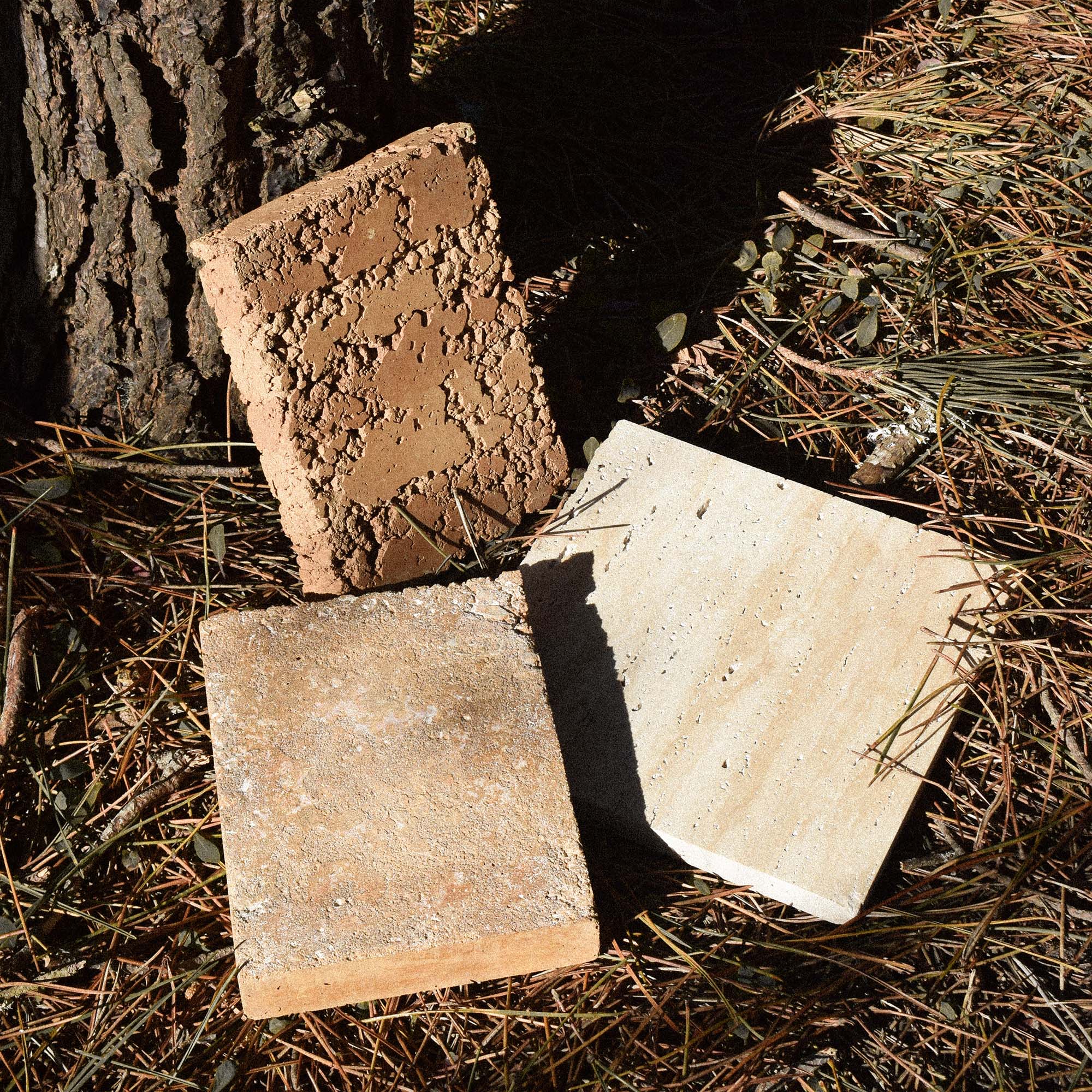
Material choices seek to root the project in the park, recalling the memory of the old quarries marked in the landscape. Just as the slopes reveal layers of the subsoil, the intervention maintains this idea of stratification, evoking the passage of time and the horizontality of material. Rammed earth concrete expresses this memory, appearing throughout the body of the project. Over this sculpted mass, Travertine stone shapes the floor and folds along the walls up to the height of the opening, marking human scale and contrasting with the roughness of the concrete.
To reinforce the presence of the clearing, native vegetation is planted to densify adjacent spaces without obstructing the view of the Tejo. Inside, a pond with aquatic plants features a bald cypress, Taxodium distichum, emerging from the water and extending through an opening toward the sky.
2025
Cultural center
Monsanto Forest Park, Lisbon
Tomás Ramos
Finalist, Archiprix Portugal Prize (2026)
Project selected for exhibition at FISTA 26 (2026)
Sombra na Clareira, in Prémio Nacional Para o Ensino de Arquitetura, Arq. Paisagista e Urbanismo, Archiprix Portugal, 2026, pp.152-155.
Sombra na Clareira, in Saber de fazer, Catálogo da exposição dos trabalhos do Mestrado Integrado em Arquitetura 2024/2025, Iscte - University Institute of Lisbon, 2026, pp.266-271.